A Fresh Look at Your Autumn Wardrobe
Rediscover what you own and make room for the clothes you actually wear
You go looking for a sweater and find three you’d forgotten about. The trousers you meant to have shortened are still there, too. Meanwhile, the cardigan you wear all the time is probably on the bedroom chair.
A wardrobe can be full and still be awkward to use. As the weather gets cooler, it’s worth taking a closer look at what’s in it. You may need fewer new clothes than you thought—or something quite different from what you planned to buy.
Start with the clothes you keep reaching for
You don’t have to empty the whole wardrobe onto the bed. Start with one crowded shelf or the rail you search through every morning. Give yourself enough room to see the clothes properly and try a few things on.
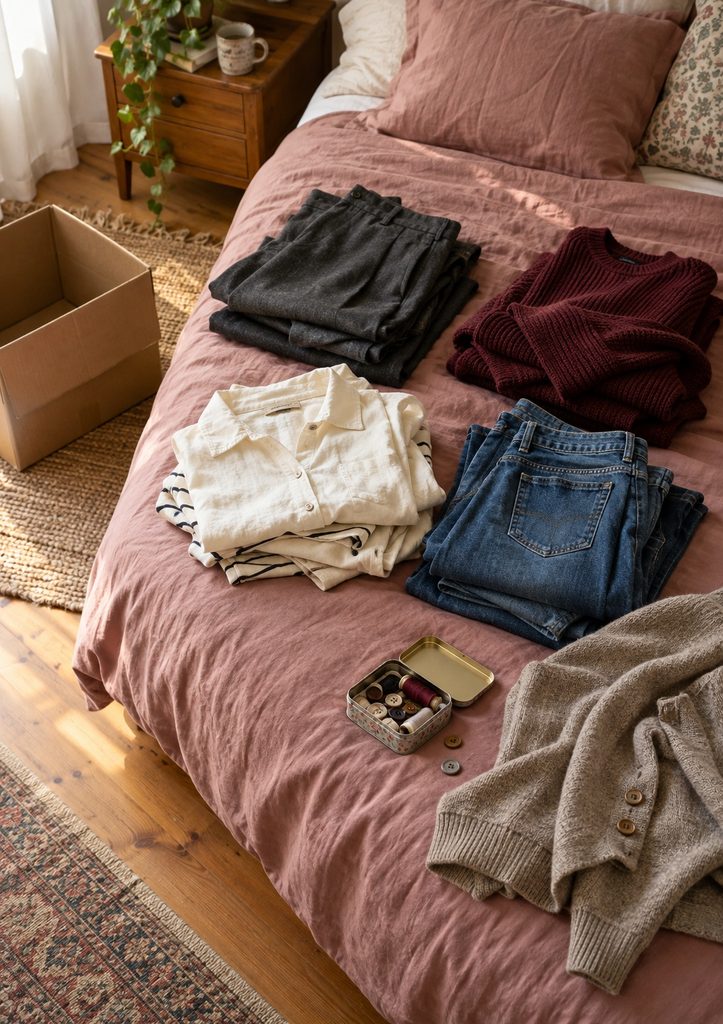
Set your regular favourites to one side. There’s usually a reason you keep wearing them: the trousers are comfortable all day, the shirt sits well under a jacket, or the sweater is soft without feeling too warm indoors. Keep those details in mind when you look at everything else.
Some clothes look lovely on a hanger but become irritating within an hour. A neckline needs adjusting, a waistband digs in when you sit down, or the sleeves get in the way. If you keep choosing something else, it helps to admit why.
Ask yourself whether you would buy that piece again. You don’t need to decide immediately, but it’s a useful question when you’re keeping something mainly because it was expensive or has hardly been worn.
Deal with the things waiting to be fixed
A missing button is easy to overlook until you’re about to leave the house. Put clothes that need attention in one place, then decide which repairs are worth doing.
Would you wear those trousers if they were shorter? If so, arrange the alteration. If you also dislike the fabric and the fit, shortening them probably won’t change much.
Give yourself a date to deal with repairs and to list anything you want to sell. Otherwise, you may find the same bag sitting untouched when spring comes around.
Clothes for special occasions deserve a little more thought. A dress you wear to weddings may still be useful even if you haven’t needed it this year. Try it on, check its condition, and consider whether you’d be happy to wear it to the next wedding or celebration.
Don’t pack away every light layer
There’s always that stretch of autumn when you need a jacket in the morning and want to take it off by lunchtime. Keep a few lightweight shirts and tops where you can reach them. They’re useful under knitwear and on those unexpectedly warm days.
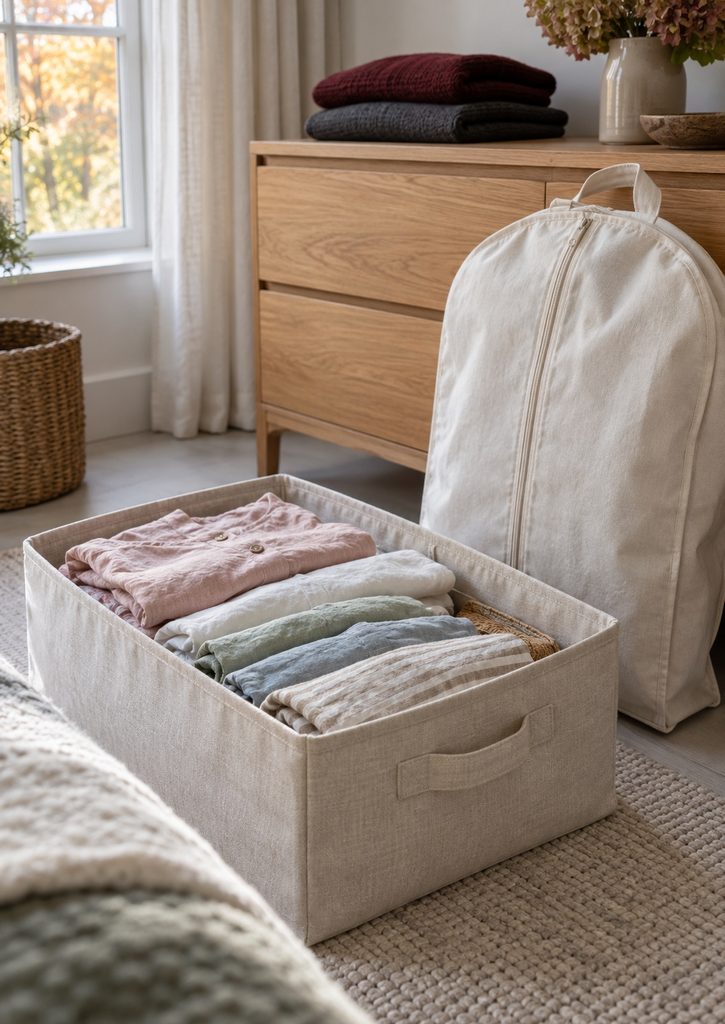
Clean the summer clothes you’re storing according to their care labels, and make sure they’re completely dry before putting them away. Label the boxes with what’s inside—“summer dresses” will save you more searching than “summer clothes.”
As you bring out heavier pieces, check them before returning them to the wardrobe. Empty coat pockets, look for loose buttons, and clean the boots you expect to wear first. Fold heavier sweaters rather than leaving them on hangers that can stretch the shoulders.
It’s much easier to do these small jobs now than to discover them on a cold morning when you’re already late.
Find a place for the clothes on the chair
Sometimes clothes end up on a chair because putting them away is a struggle. The shelf is packed, the hangers are squeezed together, or you expect to wear the same cardigan tomorrow.
A hook or a little space at the end of the rail can help with clothes you plan to wear again. Let them air, check whether they need washing, and avoid letting that spot become another pile you have to sort.
It’s also worth looking through your clothes for wearing at home. An old T-shirt can be perfectly useful, but you probably don’t need every faded one you’ve ever owned. Notice which pieces you actually choose and keep enough for your usual laundry routine.
See what works before buying organizers
Once you’ve cleared some space, put your everyday clothes where they’re easiest to reach. Keep trousers together, make sweaters easy to see, and give scarves and belts a place where they won’t disappear underneath something else.
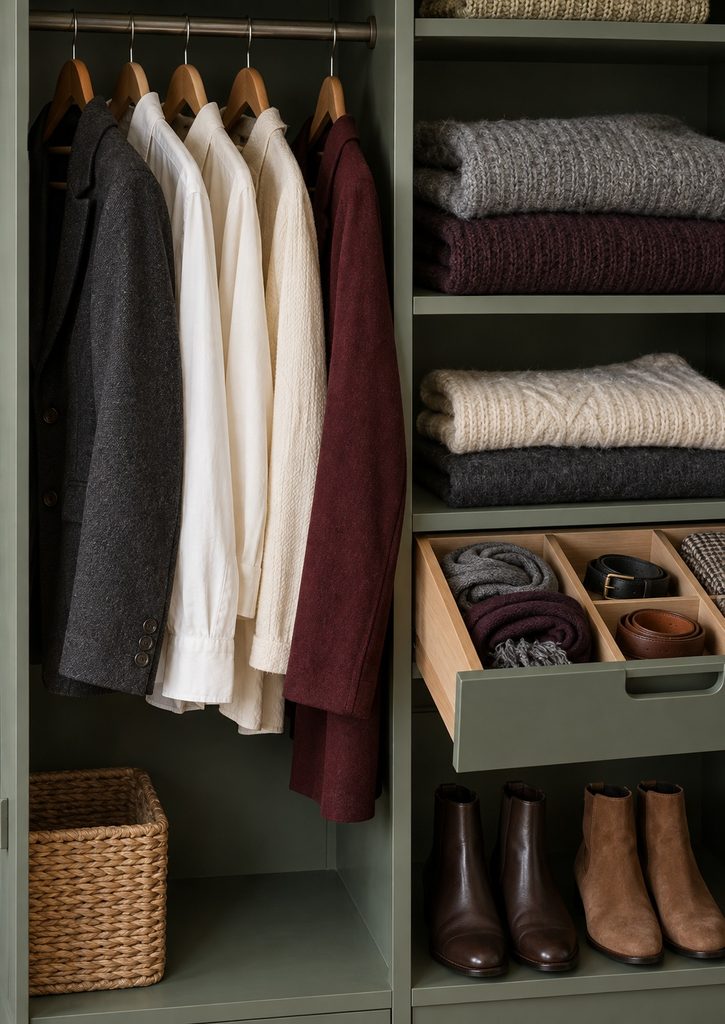
Try that arrangement for a few days. If a shelf keeps collapsing into a messy pile, a divider might help. If a drawer works perfectly well after you’ve removed a few things, it probably doesn’t need anything added.
Choose hangers that support the clothes properly. Coats need sturdier ones, while slippery tops need something that keeps them in place. There’s no need to replace every hanger simply to make them match.
Be specific about what’s missing
After you’ve worn your autumn clothes for a week or two, you’ll have a better idea of what you need.
Perhaps your boots are uncomfortable for the walk to work. Maybe you have plenty of sweaters but no coat that fits comfortably over them. Write down the problem before you start browsing.
“Flat boots I can walk in all day” gives you a clearer starting point than “new boots.” It also helps you judge whether a tempting pair will actually be useful.
Check similar pieces you already own. If a cardigan stays in the wardrobe because it’s too bulky under your jacket, another thick cardigan is likely to end up beside it.
For now, put a few favourites within easy reach and start wearing them. You might find that the jacket you’d forgotten about is exactly what you wanted for autumn—and that it deserves another season before you look for its replacement.