How to Create a Simple Printable Activity Library at Home
Printable activities are wonderfully convenient — until the pages and files start appearing everywhere.
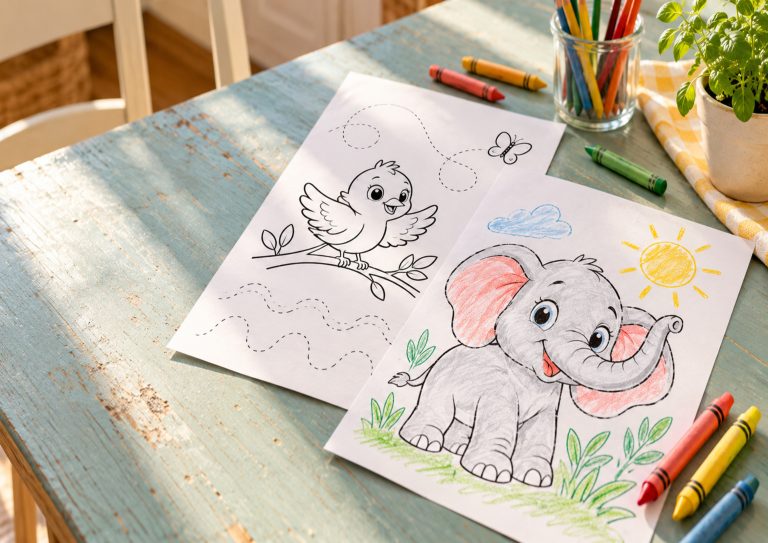
A coloring page ends up on the kitchen table. A maze disappears into a drawer. A worksheet is left in a backpack, while the original PDF is somewhere on the computer under a filename nobody remembers.
If you use printables even occasionally, a small amount of organization can make them far easier to use again.
You do not need a craft room or an elaborate storage system. One sensible digital folder, a binder and a small box of supplies can be enough.
Start With the Files You Already Have
Before printing anything else, take a look at the digital files on your computer.
Create one main folder for printable activities, then divide it into only a few broad categories.
Coloring, alphabet activities, games, seasonal pages and travel activities are enough for many families.
Avoid creating so many folders that finding something becomes another chore.
File names matter too.
A document called download_final_8472.pdf will be difficult to recognize months later. A name such as Animal Coloring Pages.pdf tells you immediately what is inside.
You Do Not Need to Print the Whole Pack
A digital set might contain 20, 30 or even more pages, but that does not mean all of them need to be printed immediately.
Choose a few that suit the moment and leave the rest on the computer.
This keeps paper from building up around the house and means the same digital set can provide something different later.
One of the most useful things about printables is precisely that the full collection can stay digital until you need it.
Give Printed Pages One Home
Loose sheets become difficult to use because they disappear.
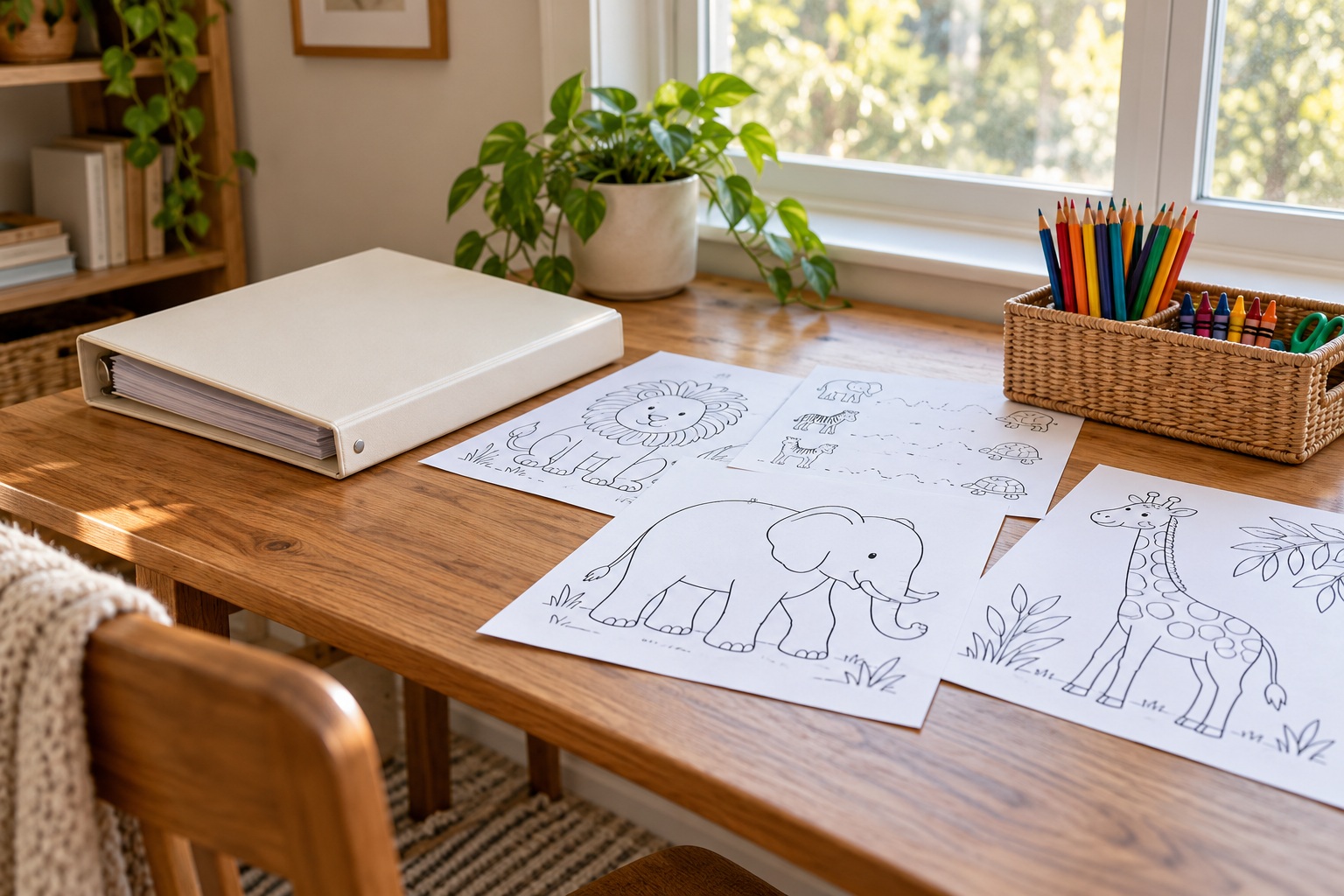
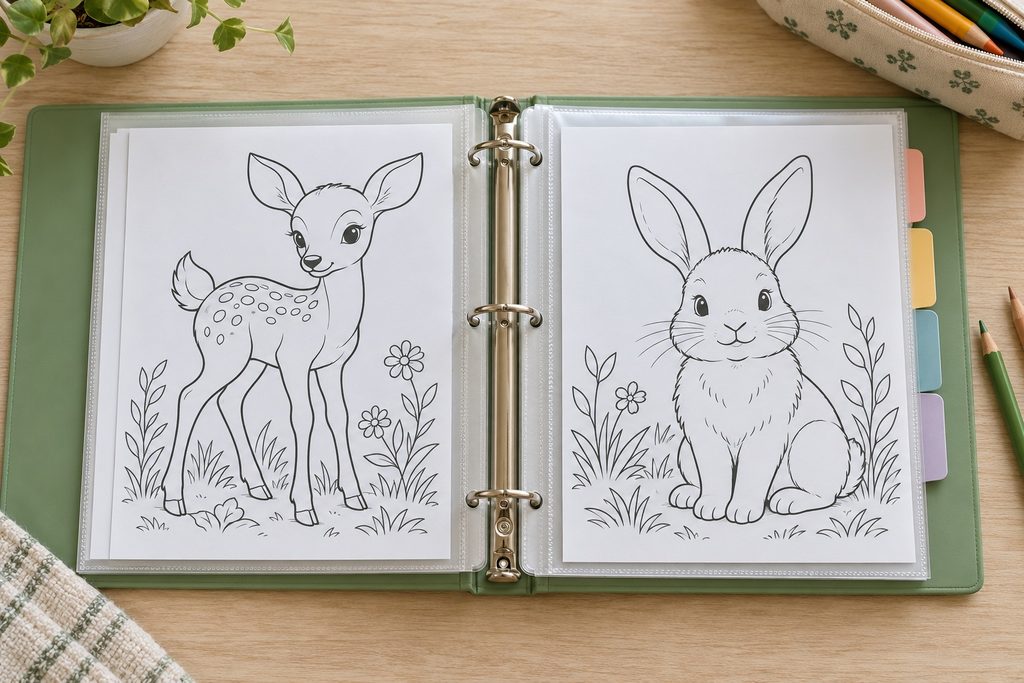
A simple binder or folder solves most of that problem.
Coloring pages can sit in one section, activity sheets in another and seasonal pages somewhere separate.
There is no need to create a perfect catalog.
The system only needs to be simple enough that you know where to look.
Clear plastic sleeves can also be useful for pages you want to protect or use again.
Keep Basic Supplies Nearby
Printables are much easier to use when the materials are already in the same place.
A small pencil case, basket or box can hold crayons, colored pencils, pencils, stickers, glue and other supplies you regularly use.
The smaller and simpler the setup, the easier it is to take out and put away.
A printable activity should not require twenty minutes of preparation.
Create Small Themes
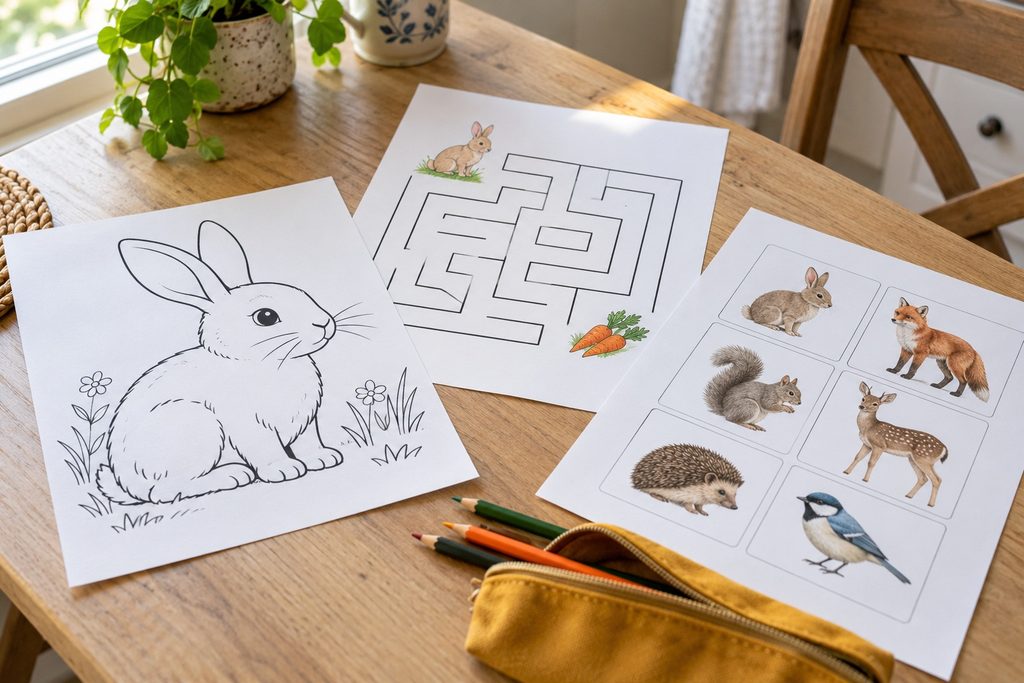
Instead of handing over a large pile of unrelated pages, group a few together.
One afternoon might be about animals. Another could combine letters and coloring. A small travel folder could contain a maze, coloring page and simple activity sheet.
If you like the idea of keeping letters, animal pictures and simple worksheets together, my Alphabet Coloring Pages & Worksheets set is one ready-to-print option.
The important idea is not constantly finding new material. It is using the same collection in different ways.
Rotate Instead of Constantly Adding
Everything does not have to be available all the time.
Keep a few printed activities in the binder and leave the rest stored digitally.
After a few weeks, swap some of them.
A page that has not been seen for a while can feel different again without requiring another download or purchase.
This also keeps the physical collection small.
Reuse the Pages That Make Sense to Reuse
Some printables can work more than once.
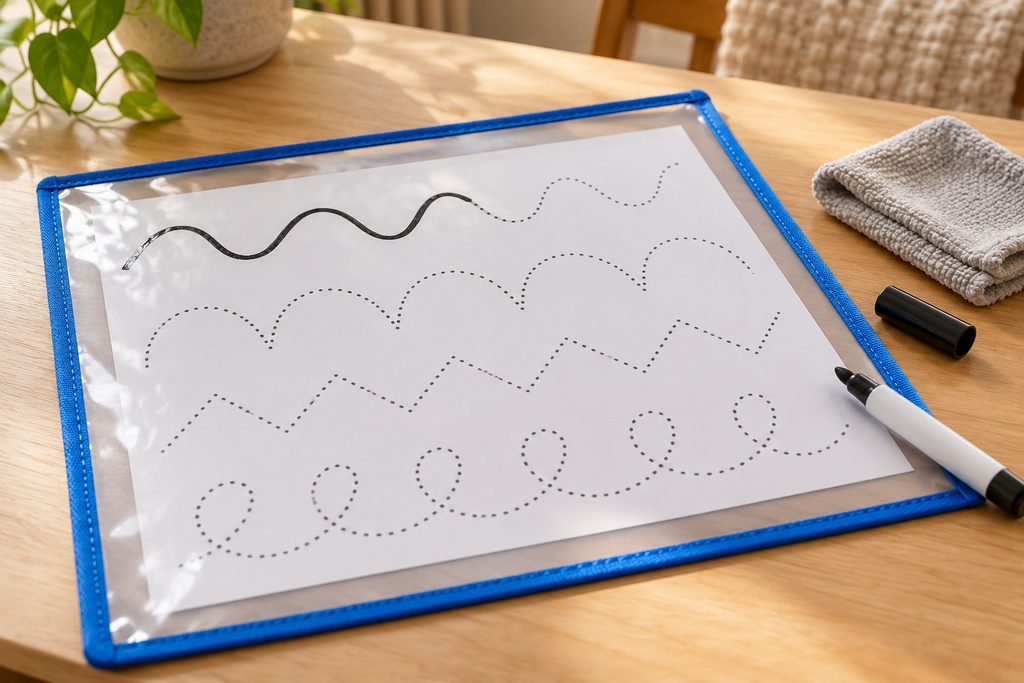
Tracing pages, mazes and certain matching activities can be placed inside a clear sleeve and used with an appropriate erasable marker.
When finished, the surface can be wiped clean and the page saved.
Not every printable needs this treatment, but it can be useful for activities that are likely to be repeated.
Give Finished Pages Another Purpose
A finished coloring page does not always have to go straight into the recycling bin.
A favorite picture can become a card. Several pages can be stapled into a homemade book. A colorful sheet can go on the refrigerator or become part of a small display.
There is no need to save every page.
Choose the ones that are actually enjoyed and let the rest go.
Keep Seasonal Files Digital Until You Need Them
Christmas, Easter, Halloween and autumn activities are much easier to manage when they are not taking up physical space all year.
Keep the files in seasonal folders and print a few when the time comes.
Next year, the same files are still there.
That is one of the quiet advantages of digital products: they do not need a cupboard of their own.
Keep the System Small
Organizing printables should make things easier, not create a new hobby you have to maintain.
One main folder on the computer, one binder for current pages and one small box of supplies can be enough.
If the collection grows later, the system can grow with it.
Building a Small Printable Collection
You also do not need dozens of different printable packs.
A few coloring pages, simple activity sheets and seasonal options already create plenty of variety.
If you are starting a collection and would like a ready-to-print option, my Printable Alphabet Coloring Pages & Worksheets set combines letters, animal coloring pages and simple worksheets in one file.
It is available through my Gumroad shop and Etsy shop.
A printable collection becomes useful when you can actually find what you already have.
Keeping the digital files clearly named, printing only a few pages at a time and giving the printed sheets one regular place prevents a small collection from turning into clutter.
You do not need hundreds of activities.
You need a system simple enough that the ones you already have are easy to use.