Barcelona’s Hidden Treasures
From the decorated pavilions of Sant Pau to a garden in Sant Gervasi, these five places are worth making room for.
On Passeig de Gràcia, it is easy to spend several minutes looking up at a building and barely notice the one beside it. Barcelona gives your eyes plenty of work: carved balconies, patterned tiles, unusual rooflines and doorways that make you wonder what lies inside.
Some places need a booked visit. Others ask for little more than a walk and enough time to sit down. A good stay in Barcelona can include both.
This selection brings together two established favorites—Sant Pau and Gràcia—with three less obvious choices: the interior of Casa Amatller, Jardins de la Tamarita and Monestir de Pedralbes. They offer different pleasures, from a richly furnished home to an afternoon around neighborhood squares.
Casa Amatller: The House Beside Casa Batlló
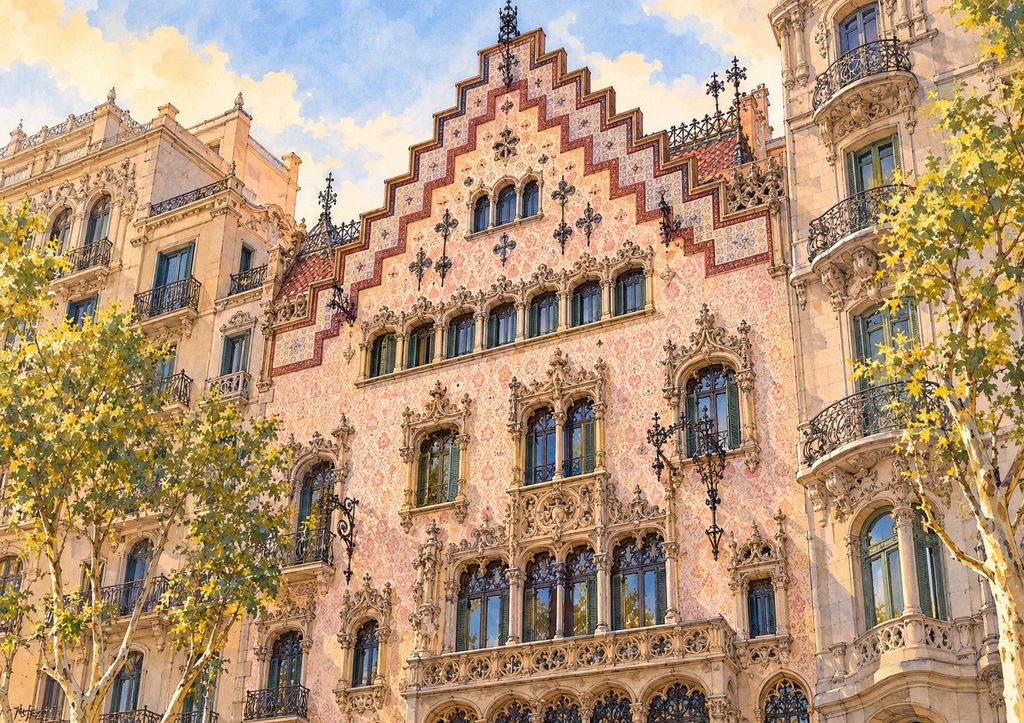
Casa Amatller stands next to Casa Batlló, which explains why some visitors photograph it without ever learning its name. Yet its stepped roofline and sculpted façade deserve a closer look.
Designed by Josep Puig i Cadafalch, the house combines Gothic influences with a roofline inspired by buildings in the Netherlands. It has its own distinctive presence on an avenue where standing out is no small achievement.
The reason to go inside is the house itself. Original furniture and decoration remain, allowing you to see the rooms as parts of a home rather than simply admire an impressive staircase or ceiling.
Look at the craftsmanship, but also at how the rooms fit together. It is one thing to admire an ornate façade from the pavement; it is another to imagine having breakfast, receiving guests or spending an ordinary evening behind it.
Casa Amatller works well in any season and is a useful choice for a rainy or particularly hot day. Check the available tour options before visiting. Afterwards, cross the avenue when it is safe to do so and look at the building from a little further away. Its place among the neighboring houses becomes easier to appreciate.
Jardins de la Tamarita: A Garden in Sant Gervasi
Near Avinguda Tibidabo, Jardins de la Tamarita occupies grounds that belonged to a private residence in the early twentieth century. Its smaller scale makes it a pleasant change after Barcelona’s large monuments.
Landscape architect Nicolau Maria Rubió i Tudurí brought Mediterranean and Renaissance influences into the design. Among its distinctive features is the Plaça dels Quatre Continents, with sculptures by Virgilio Arias.
Here, the interest is in the relationship between planting, paths and ornament. A sculpture partly framed by greenery can hold your attention as effectively as a much larger landmark. You can enjoy the garden without needing to know every plant or understand every reference in its design.
Choose a mild spring or autumn day if you can. During summer, a cooler part of the day will make the walk more comfortable. Check current access before setting out.
Tamarita is best treated as a short garden visit rather than the centerpiece of an entire day. Give it enough time for an unhurried walk, particularly if you are already exploring this part of Barcelona.
Sant Pau: A Remarkable Place to Have Built a Hospital
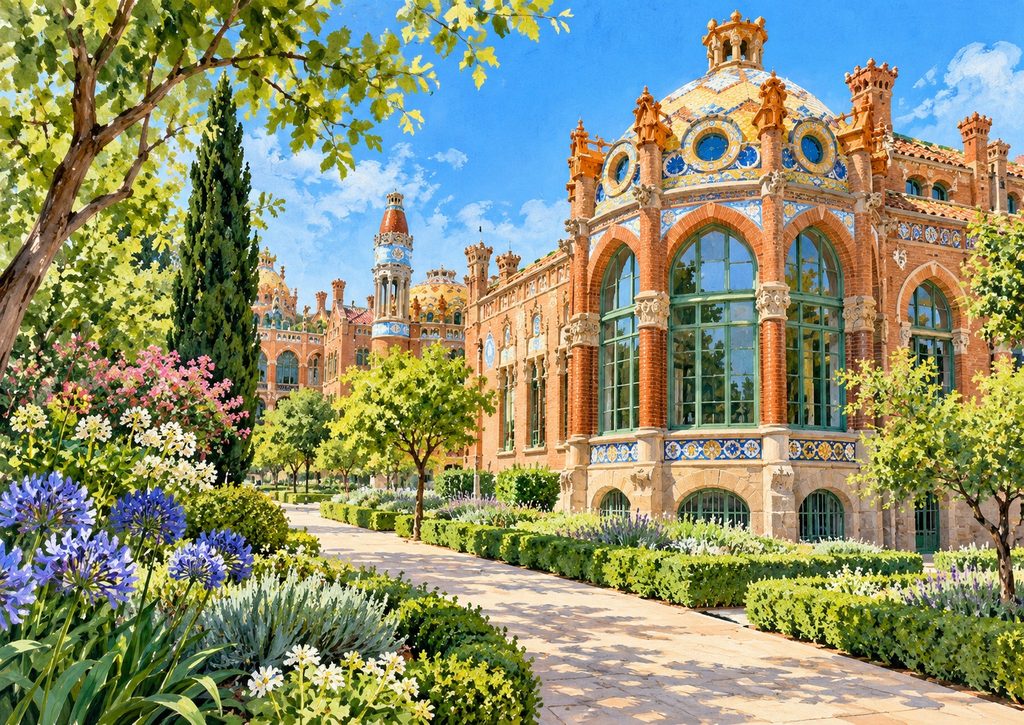
Colorful ceramics, decorated pavilions and gardens are not what most people picture when they think of a hospital. That is what makes Recinte Modernista de Sant Pau so absorbing.
Architect Lluís Domènech i Montaner designed the former hospital complex with outdoor space where patients could walk. The setting was part of his approach to the building’s purpose, rather than decoration added around it.
Today, Sant Pau belongs to the UNESCO World Heritage property shared with the Palau de la Música Catalana. Its pavilions are arranged within green space and connected by underground galleries.
The complex rewards looking at it from different distances. Stand back to appreciate the arrangement of the buildings, then move closer to examine a tiled surface or a carved detail. Indoors, remember to look above eye level; some of the decoration is easy to miss if you move too quickly.
Sant Pau is an excellent choice for anyone interested in architecture, even without specialist knowledge. Its former use gives you something concrete to think about as you explore: how might a beautiful setting have changed the experience of being a patient here?
Spring and autumn are appealing seasons because you can comfortably spend time in the gardens as well as the interiors. Check which spaces are included in your chosen visit and allow around two hours as a planning estimate.
Monestir de Pedralbes: A Cloister Worth Taking Your Time Over
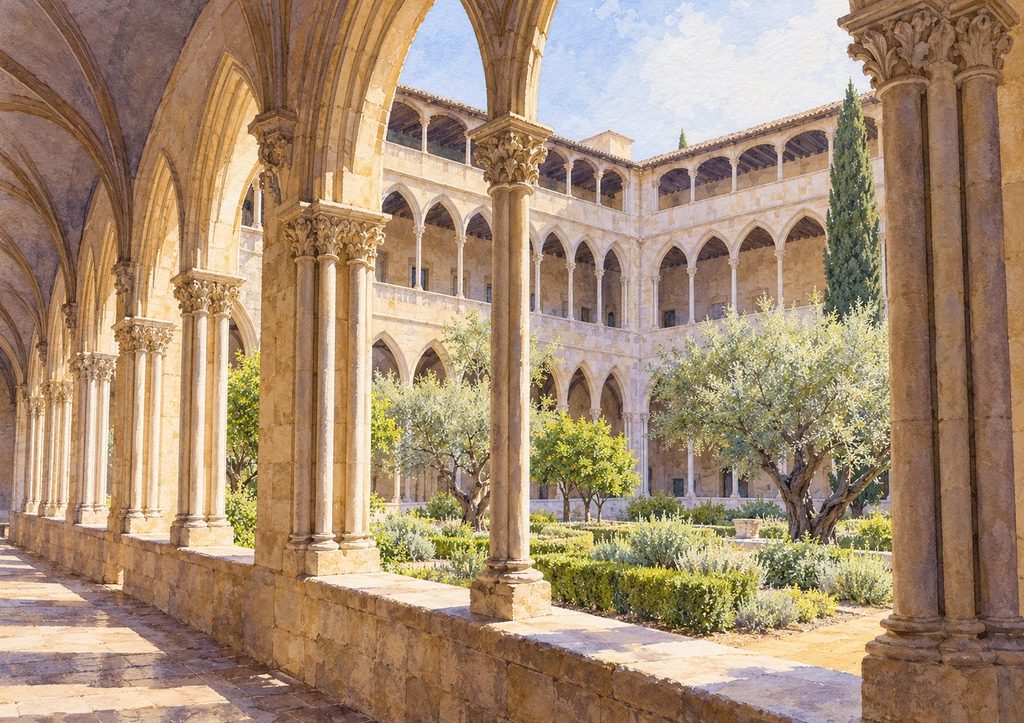
The three-storey Gothic cloister is the heart of Monestir de Pedralbes. Historic rooms are arranged around it, and the monastery’s history stretches back almost seven centuries.
The courtyard may be the first thing you photograph, but the galleries deserve more than a quick circuit. As you walk beneath the arches, the garden appears in different frames. Columns overlap, openings line up and the view changes with just a few steps.
There is plenty to explore beyond that first impression. The monastery’s artistic treasures include the fourteenth-century paintings in the Chapel of Sant Miquel; check its current access arrangements if you particularly want to see them.
Pedralbes is a good choice when you would like a visit focused on medieval architecture and history. It also provides a contrast to the colorful Modernista buildings elsewhere in Barcelona: here, much of the visual interest comes from stone, proportions and repeating arches.
Visit during daytime opening hours, preferably without another booking pressing immediately afterwards. Mild weather makes the courtyard especially enjoyable, but the historic interiors give the visit substance throughout the year.
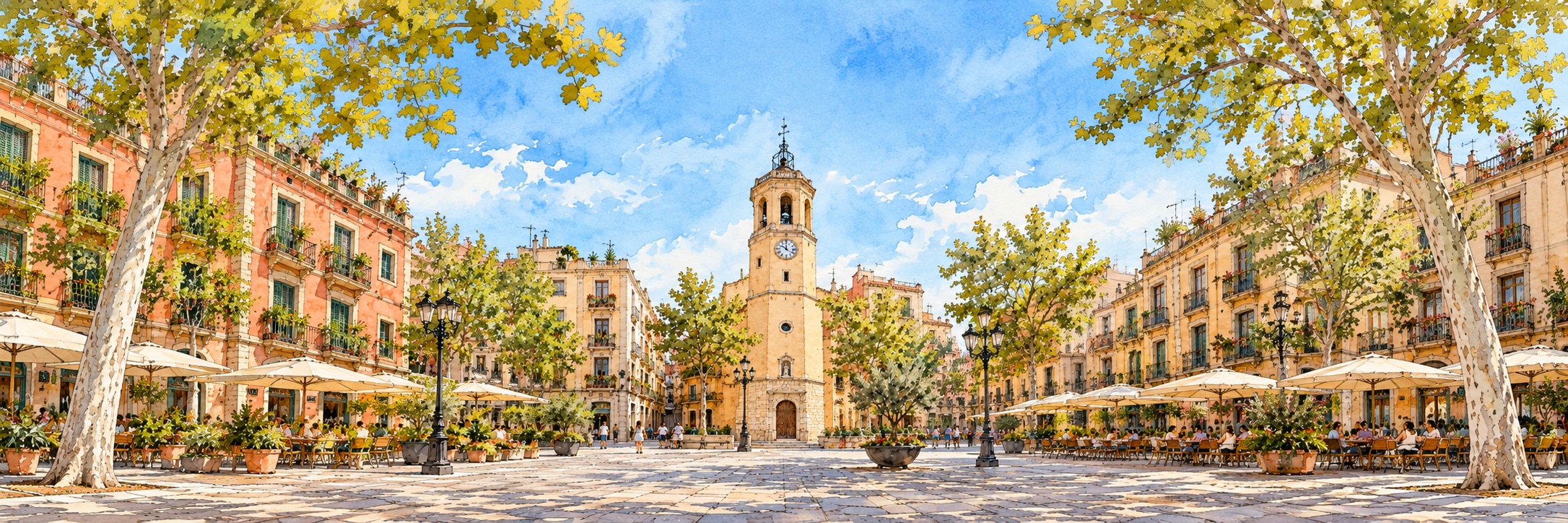
Gràcia: Squares, Side Streets and a Table for Lunch
Gràcia offers a different kind of afternoon. You can arrive with the names of a couple of squares and leave the rest undecided.
Once an independent town, it became part of Barcelona in 1897. Its squares remain important places for neighborhood life, giving visitors somewhere to pause between the surrounding streets.
Plaça de la Vila de Gràcia and Plaça del Sol are good starting points. Walk between them, browse a shop if something catches your eye and choose a terrace because you like the look of it.
The neighborhood is well known, and its popular squares can be busy. Come for the cafés, the streets and the opportunity to spend time outdoors, rather than expecting an undiscovered corner with nobody else around.
Late morning suits a walk followed by lunch. An afternoon visit works equally well if you prefer coffee and some browsing. On a warm day, a shaded table may become the most attractive destination of all.
Gràcia gives you permission to stop sightseeing for a while. You can finish your drink, order something else and let the next part of the day wait.
Before You Visit
These places do not need to become a five-stop itinerary. Choose them according to your interests and where you will already be spending time.
Check current opening hours and tour arrangements for Casa Amatller, Sant Pau and Pedralbes, and confirm access to Tamarita. Keep your bag closed and your phone secure, particularly in crowded areas and on public transport; official travel advice identifies pickpocketing and bag theft as common risks in Barcelona.
A visit to Casa Amatller might change how you look at the houses along Passeig de Gràcia. Sant Pau may send you searching for more of Domènech i Montaner’s work. Or you may find that the afternoon you want to repeat is the one spent in Gràcia, with lunch finished and no particular reason to leave your table yet.