Prague in Autumn: Coffee, Fog and the City of a Hundred Spires
What to see, where to sit and why October is the right month for the Vltava
On some autumn mornings, mist hangs over the Vltava and Charles Bridge emerges from it one statue at a time. The cobblestones shine after rain; later, the first tour groups reach Old Town Square. If you can catch the city in that quiet stretch before the crowds, you may find yourself wanting to start every day the same way.
Why autumn
After the summer rush, Prague settles into a different rhythm. Its famous sights are still popular, but there is more pleasure in lingering over a coffee or taking the longer way through a park. October can bring crisp walking weather and beautiful leaves, especially later in the month. It can also bring rain, so a light waterproof layer is worth packing.
The historic centre, a UNESCO World Heritage Site since 1992, is compact enough to explore largely on foot. Gothic towers, Baroque palaces and Art Nouveau facades appear around successive corners. There is no need to turn the walk into a race between landmarks.
Coffee first
Café Louvre on Národní Street opened in 1902. Upstairs, its high ceilings, generous rooms and billiard hall feel made for a long pause. Franz Kafka and Albert Einstein are among the famous names associated with the café.
Across from the National Theatre, Café Slavia looks towards the river and Prague Castle. Open since the late nineteenth century, it became a meeting place for artists and dissidents, and Václav Havel was a frequent visitor. Viktor Oliva’s The Absinthe Drinker hangs inside. For a change of scene, try Grand Café Orient in the House of the Black Madonna, a Cubist building completed in 1912.
Charles Bridge before the crowds
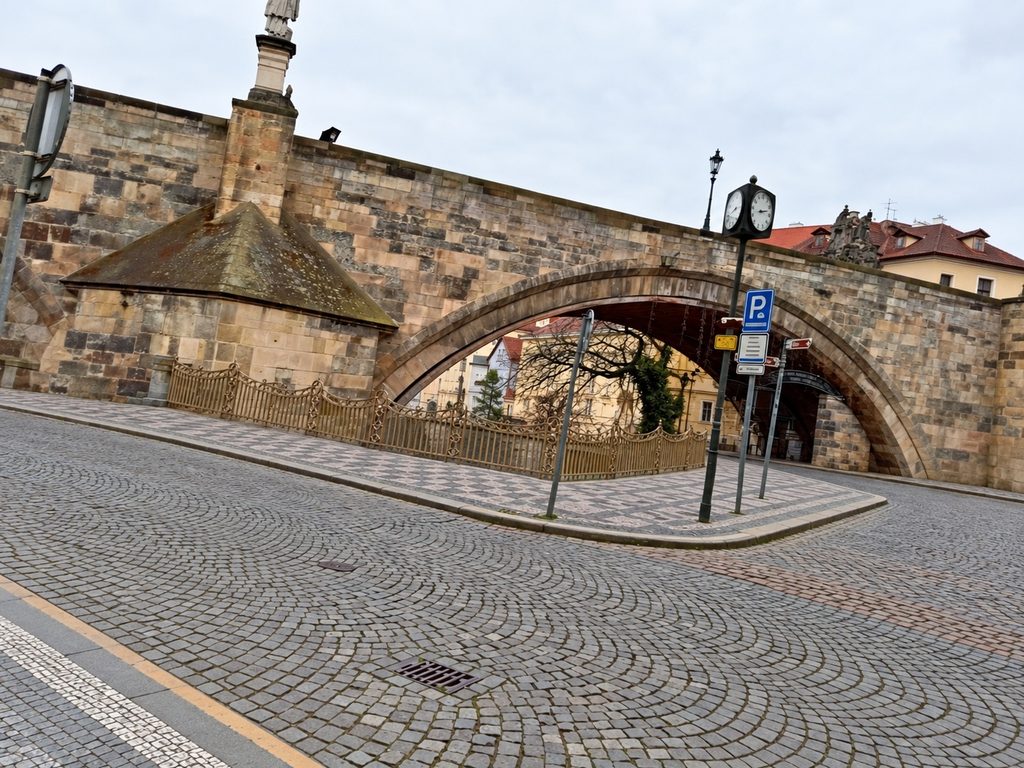
Work on Charles Bridge began in 1357 under Charles IV. The bridge stretches for about 516 metres and is lined with thirty sculptural groups; many of the figures you see today are copies. Come early if you would like room to stop and look along the river. On a misty morning, the statues can seem to appear one by one. Later, street musicians and artists give the bridge a different energy, even if finding an empty spot by the parapet becomes harder.
Old Town and Josefov
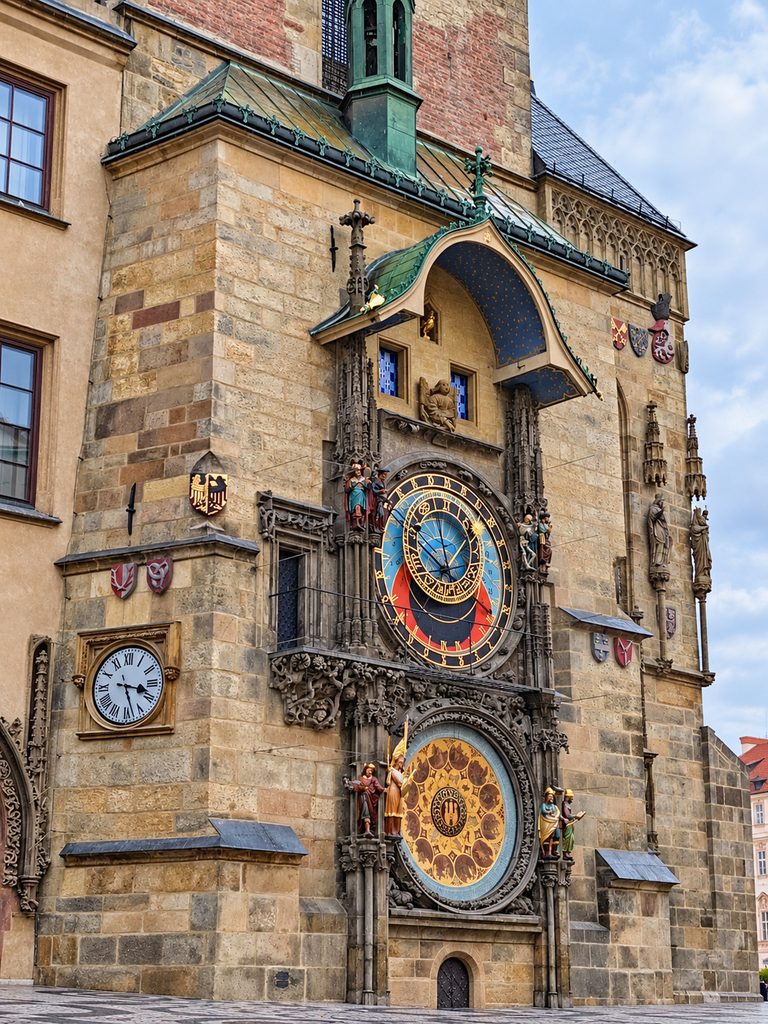
Narrow streets lead from the bridge to Old Town Square. On the Old Town Hall is the Astronomical Clock, or Orloj, whose oldest part dates from 1410. During its daytime and evening programme, the apostles appear at the windows on the hour while Death rings a bell. The display lasts only a short while, and people tend to gather ahead of time.
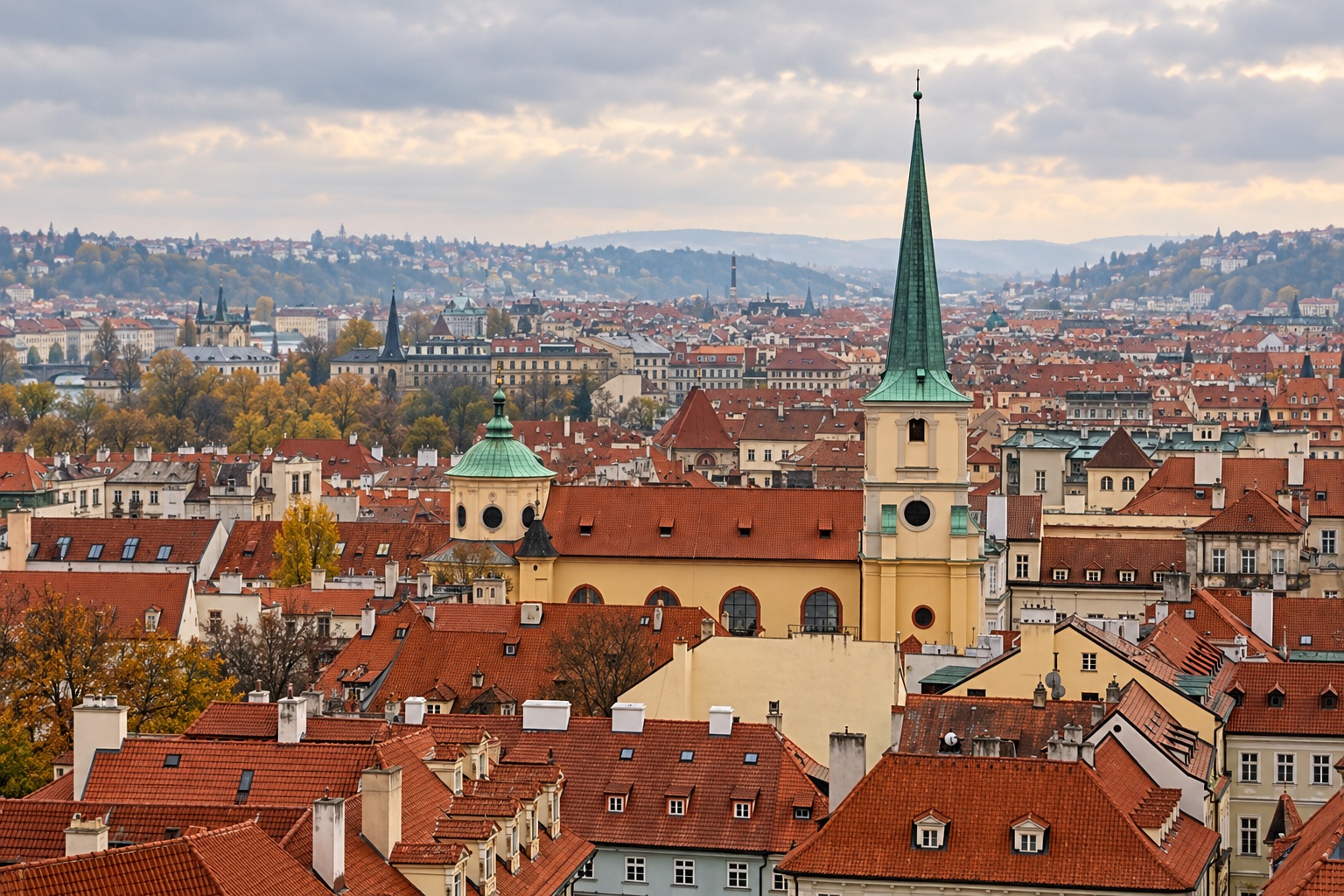
The pointed towers of the Church of Our Lady before Týn rise beside the square. If you want a view over the red rooftops, climb the Old Town Hall tower. A short walk away, Josefov’s Old Jewish Cemetery dates back to the fifteenth century. Its headstones stand shoulder to shoulder, with centuries of burials layered beneath them. The Spanish Synagogue, richly decorated in a Moorish-inspired style, is nearby.
Malá Strana and Prague Castle
Cross the bridge to Malá Strana and the streets begin to climb past Baroque palaces and tucked-away courtyards. Step inside St Nicholas Church if you enjoy grand interiors. The Čertovka canal skirts Kampa Island, where benches face the bridge. The Lennon Wall, covered in changing messages and artwork since the 1980s, is a short walk away.
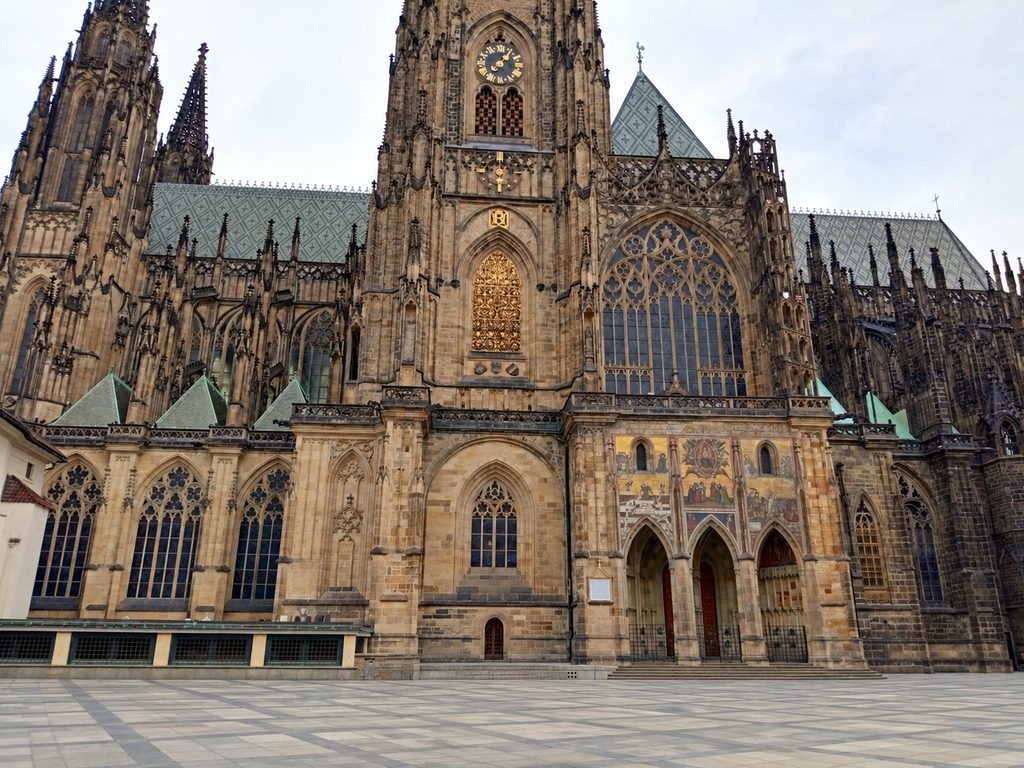
Prague Castle is a complex of palaces, courtyards and churches rather than a single building. Construction of St Vitus Cathedral began in 1344 and ended in 1929. One stained-glass window was made from a design by Alfons Mucha. In Golden Lane, tiny painted houses stand close together; Franz Kafka worked at number 22 during the winter of 1916–17. Allow at least three hours for a visit, and check opening times and ticket options before you go.
Where to find autumn colour
- Petřín: Orchards climb the hill above Malá Strana. Its lookout tower, built in 1891 with the Eiffel Tower in mind, has 299 steps to the top. The funicular can save you the climb up the hill; check its current service before setting off.
- Letná: From this ridge, you can look down over several bridges at once. A giant metronome stands where the Stalin monument once stood, and the beer garden opens seasonally.
- Vyšehrad: Walk the grounds of the historic fortress above the river and visit the Church of St Peter and St Paul. Antonín Dvořák, Bedřich Smetana and Alfons Mucha are buried at Vyšehrad Cemetery, which also contains the Slavín tomb.
- Havlíčkovy sady (Grébovka): Terraces, a grotto and a vineyard make this park worth a detour from the busiest streets.
- Stromovka: A broad green space with mature trees, once a royal hunting ground.
When it rains
The Strahov Monastery Library has two spectacular rooms: the seventeenth-century Theological Hall and the eighteenth-century Philosophical Hall. Their painted ceilings alone are reason to slow down. Municipal House (Obecní dům), completed in 1912, is a beautiful example of Prague Art Nouveau; there is a café inside if you would rather watch the rain through a window.
For something more modern, see the Dancing House (Tančící dům), completed in 1996 from a design by Vlado Milunić and Frank Gehry. The Mucha Museum on Panská Street is another option for a wet afternoon.
What to eat and drink
Cooler days call for hearty meals. Svíčková is beef with a creamy root-vegetable sauce, usually served with dumplings and cranberries. Goulash and roast duck with red cabbage are other classics, and Czech beer needs little introduction. In early autumn, look out for burčák, a sweetish young wine that is still fermenting; its availability depends on the season.
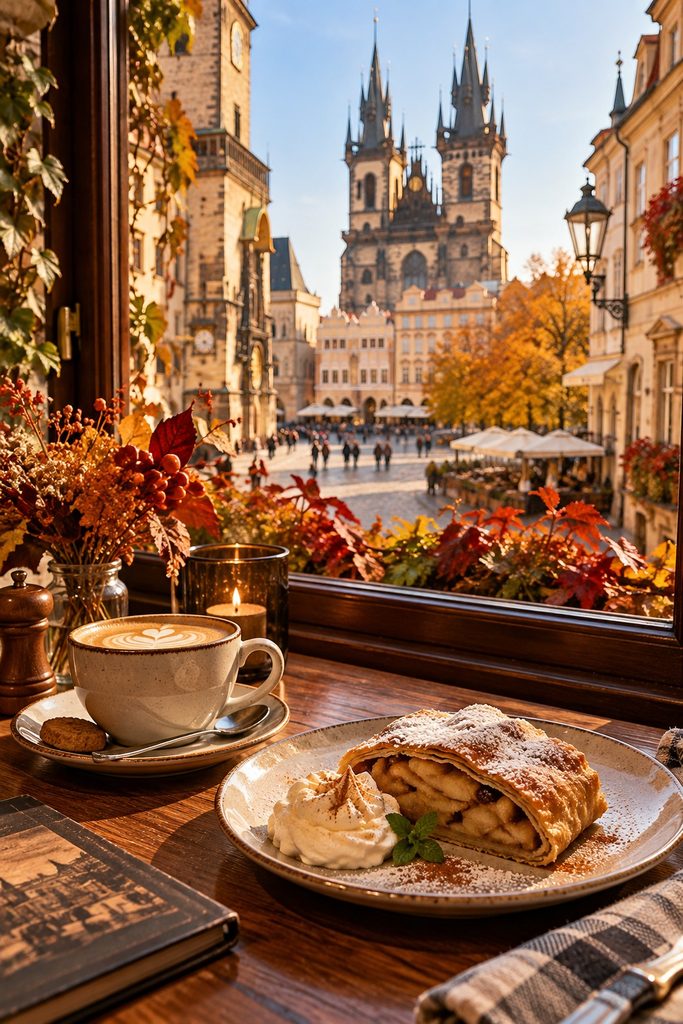
For something sweet with coffee, try apple strudel or koláč, a pastry filled with cheese, poppy seeds or fruit. You will see trdelník in tourist areas too, though it is better thought of as a popular treat than as an ancient tradition unique to Prague.
Autumn calendar
- 28 September: Czech Statehood Day, associated with St Wenceslas.
- October: Signal Festival brings light art to the city; check the dates for the year of your visit.
- 28 October: Independent Czechoslovak State Day, a public holiday.
- 2 November: Dušičky, when candles are lit at gravesides.
- Late November: Christmas markets usually begin; confirm the dates before travelling.
A day trip
Kutná Hora is around an hour from Prague by train to the main station. Its historic centre is UNESCO-listed, and the Church of St Barbara and the Sedlec Ossuary are two memorable reasons to go. They are not next door to each other, so leave time to get around town.
Planning a trip to Prague? My printable travel planner helps you organise your itinerary, packing list and budget in one place. It comes in two styles and works for any destination. Explore the travel planner
Practical tips
- Tram 22 is useful for Malá Strana and Prague Castle, but check its current route in case of works.
- Dress in layers. A mild afternoon can follow a chilly morning.
- Cobbles are beautiful and unforgiving of thin soles.
- Book dinner ahead if you have a particular restaurant in mind, especially at weekends.
Prague in autumn does not need every hour mapped out. Rise early, find a café as the city wakes and leave room for the street you did not plan to take.