Hidden European Cities to Visit Before Everyone Else Does
A quieter European city break does not have to mean giving up beautiful architecture, great food or streets worth exploring.
Paris, Rome and Barcelona deserve their popularity, but they can also require more planning, higher accommodation budgets and a willingness to share the experience with a lot of other visitors.
Sometimes it is more enjoyable to choose a city that offers plenty to see without making every day feel like a race between major attractions.
The five places below are not secret destinations. That would be difficult to claim in modern Europe.
They are simply cities that still tend to sit outside the most predictable first choices for an international city break.
Ghent, Belgium
Best for: architecture, art and relaxed weekends
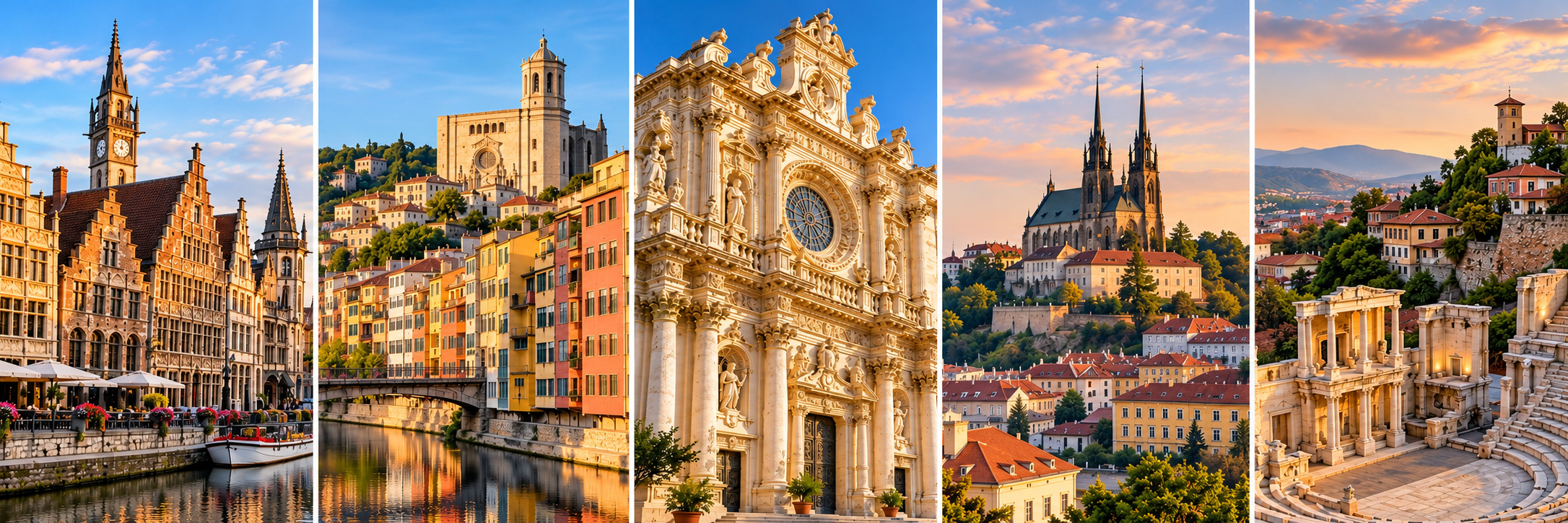
Ghent combines the visual appeal people often associate with Bruges — canals, old guild houses and medieval architecture — with the energy of a university city.
The Graslei and Korenlei quays are an easy place to begin. From there, walk toward Gravensteen Castle and continue through the historic center without trying to plan every street in advance.
St Bavo’s Cathedral is home to the famous Ghent Altarpiece, also known as The Adoration of the Mystic Lamb, completed by the Van Eyck brothers in 1432.
If seeing the altarpiece is important to you, it is worth checking current visitor information and tickets before your trip.
Ghent works particularly well for a two- or three-day stay because much of the historic center is enjoyable on foot.
Where to stay: the historic center, Patershol or the canal area are convenient choices if you want evening walks close to your accommodation.
Girona, Spain
Best for: old streets, food and slow travel
Girona feels very different from nearby Barcelona.
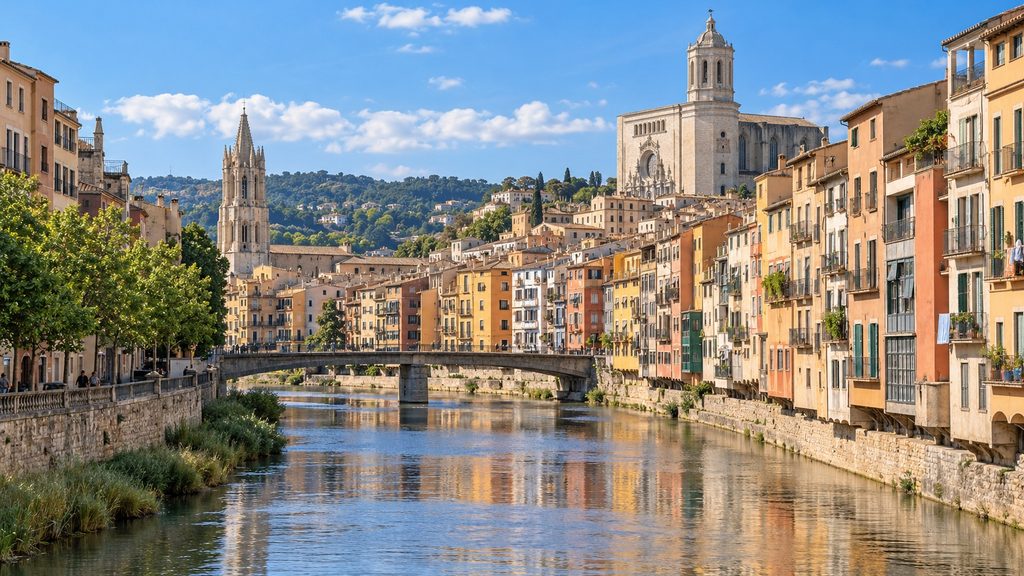
Its colorful houses along the Onyar River provide the familiar postcard view, but some of the most atmospheric streets are found inside the historic center.
El Call, Girona’s Jewish Quarter, is a network of narrow streets and courtyards that has preserved its medieval character. The city walls are also open for walking and provide views across Girona and the surrounding landscape.
Girona is particularly suited to travelers who do not want every hour planned.
Walk the old streets, cross the bridges over the Onyar and leave enough time to stop when somewhere looks interesting.
One period does require a little warning if your priority is avoiding crowds. The annual Temps de Flors flower festival is beautiful but extremely popular. Girona City Council reported more than 400,000 visits to festival spaces during the 2026 edition.
Go during the festival if the flowers are part of the reason for your trip. Choose another week if you want a quieter version of the city.
Where to stay: Barri Vell is ideal if you want historic streets immediately outside your door.
Lecce, Italy
Best for: Baroque architecture, food and warm evenings
Lecce is a good choice for travelers who love Italian cities but would like something different from the usual Florence-Rome-Venice route.
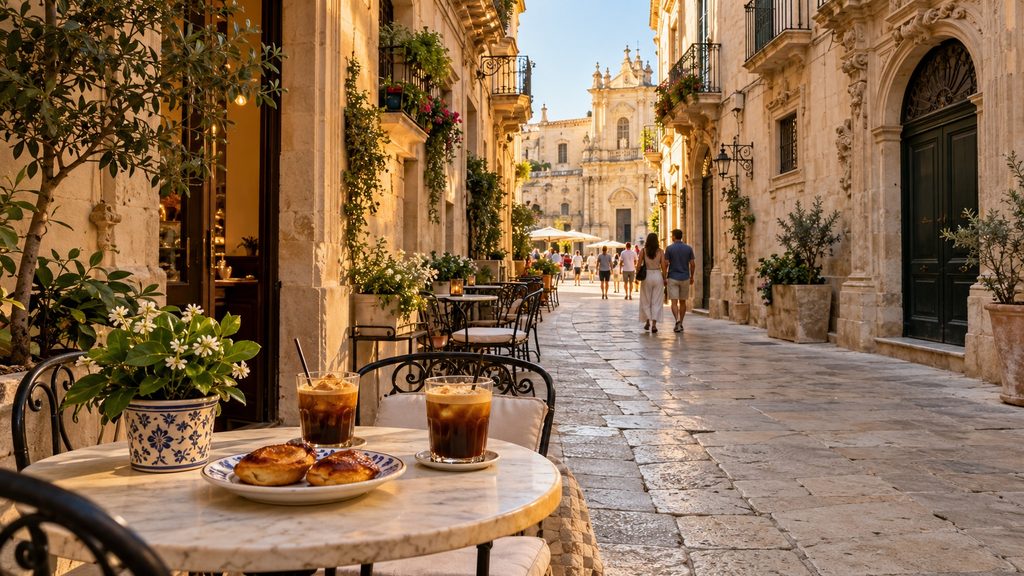
The historic center is known for elaborate Baroque façades carved from local Lecce stone.
The Basilica di Santa Croce is one of the city’s best-known examples, while Piazza del Duomo and Piazza Sant’Oronzo make easy stops during a walk through the center.
Part of a Roman amphitheater is still visible beside Piazza Sant’Oronzo; official Puglia tourism information dates it to the second century AD.
Lecce is also a city where food can become part of the sightseeing.
Try a pasticciotto, the small custard-filled pastry associated with Salento, or a caffè leccese, usually served cold with almond syrup.
Two days are enough for the city itself, while a longer stay allows time to explore more of Salento.
Where to stay: inside or just outside the historic center, where evening walks become one of the nicest parts of the visit.
Brno, Czechia
Best for: architecture, design and an easy weekend trip
Brno is not a smaller version of Prague, and it is more interesting when treated as a city with its own character.
The historic center is compact, with Špilberk Castle above the city, the Cathedral of St Peter and Paul on Petrov Hill and Zelný trh — the Vegetable Market — in the center. These are all highlighted among Brno’s main visitor attractions by the city’s official tourism organization.
Architecture is one of Brno’s strongest reasons for a visit.
Villa Tugendhat, designed by Ludwig Mies van der Rohe, has been on the UNESCO World Heritage List since 2001.
Interior tours have limited group sizes and use timed tickets, so this is one attraction worth organizing before the rest of the weekend.
Two days give you a good introduction to Brno without spending the whole trip moving from one attraction to the next.
Where to stay: the center around Zelný trh and the surrounding streets is practical for exploring on foot.
Plovdiv, Bulgaria
Best for: history, creative neighborhoods and a slower pace
Plovdiv is interesting because very different periods of history sit unusually close together.
The Ancient Theatre of Philippopolis was built in the 90s of the first century AD and remains a functioning venue for theater, opera and music today.
From there, the Old Town leads through cobbled streets and colorful historic houses.
Then the atmosphere changes again in Kapana.
The former craftsmen’s quarter has developed into a creative district filled with galleries, studios, cafés, bars and restaurants. Its modern revival was linked to the cultural program through which Plovdiv became European Capital of Culture in 2019.
Leave some time without a plan, particularly toward the end of the day. Plovdiv rewards wandering more than rushing.
Where to stay: choose the Old Town for history and atmosphere, or Kapana if you prefer cafés and evening activity close by.
Which City Fits Your Trip?
For romantic streets and food, Girona or Lecce are easy choices.
If architecture is the main reason you travel, Ghent, Lecce and Brno offer three very different experiences.
For ancient history and a creative city atmosphere, Plovdiv stands out.
The common thread is not that these places are unknown.
It is that they allow you to build a European city break around the city itself rather than around a checklist of famous sights.
Some of the best city trips begin with a place you know only a little about.
Without a long list of compulsory landmarks, there is more room for the things that often become the real memory of a trip: a street you did not intend to find, a café where you stayed longer than planned, an evening walk or a view you had not seen a hundred times before travelling.
Ghent, Girona, Lecce, Brno and Plovdiv are already well worth knowing.
They simply have not become everyone’s automatic choice yet.